VVVinyl
Digital crate digging
Introduction
Today, music streaming revenue now makes up 80% of the industry (RIAA 2021). The popularity in music streaming services makes sense as how can one deny the convenience of it. For a low monthly subscription price of $9.99, users have on-demand unlimited access to an endless stream of music. The business aspect of the music industry has also benefited from this change in music consumption. Streaming services have been able to remove the need of pirating music (Butler 2019). So if streaming is the best way to consume music, why are dated formats of consuming music such as vinyl coming back?
This could be a result of multiple factors such as the listening experience, sound quality, ownership of music, and nostalgia. According to MusicWatch (2014), the biggest age demographic which buys vinyls are 18-25 (26%). Each generation can have a different perspective on the previous generation and thus vinyl collecting has become a popular hobby amongst millennials. The process of spending time to purchase physical music gives listeners an alternative to ease of streaming. The convenience of streaming has made music feel somewhat disposable as it is often played in the background without much thought and consideration.
Stage 1
Challenge & Motivation
The most common ways to purchase physical music are through record stores, online stores, and online marketplaces such as Discogs. These options are all fantastic for existing consumers but these shopping experiences can be overwhelming for people who are just getting started. Moreover, these shops do not allow for a personalised browsing experience. From the insights that were gathered from interviews, existing consumers do not have any records in mind when they visit a record when they are browsing records. This is because most existing vinyl collectors already have their favourite albums/EPs in their collection. This is an important factor when it comes to music as it is a media that is very much subjected towards your taste.
UX Research & Findings
This phase began with six semi-structured interviews being conducted as a part of user research. The participants were recruited through asking friends, colleagues, and family. The six participants were people in the age between 18-25 who had experience in collecting vinyl as a hobby. This age group was chosen as it is the biggest age demographic that collects and buys vinyl. These were the only requirements that the participants had to meet in order to participate. Furthermore, gender and occupation are included in the participants information but these factors should not affect the outcome of the interviews. User surveys were then given out to 20 people in order to validate outcomes of the interviews.
3 out of 6 people prefer to buy vinyl in person while the other prefers to buy them online.
3 out of 6 users prefer to buy in person because buying online takes away the charm and authenticity from the experience.
3 out of 6 users prefer to buy online because it will often have what they want.
Users who buy online have an easier time browsing for their desired record than people who buy in person.
The average user spends around 25minutes browsing for their desired records.
3 out of 6 users know what they want while the others dont know what they want.
4 out of 6 have already collected their favourite albums.
Users want the option to buy a wide variety of different types of records.
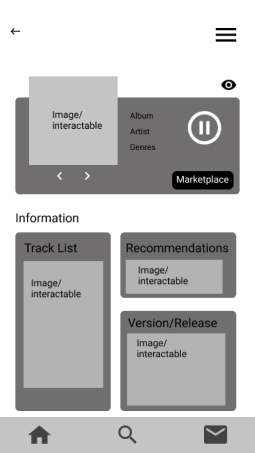
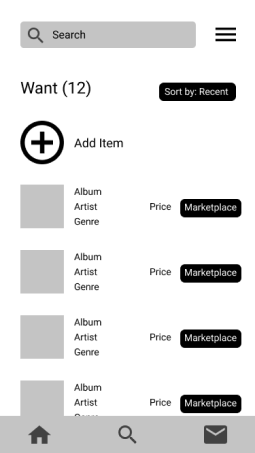
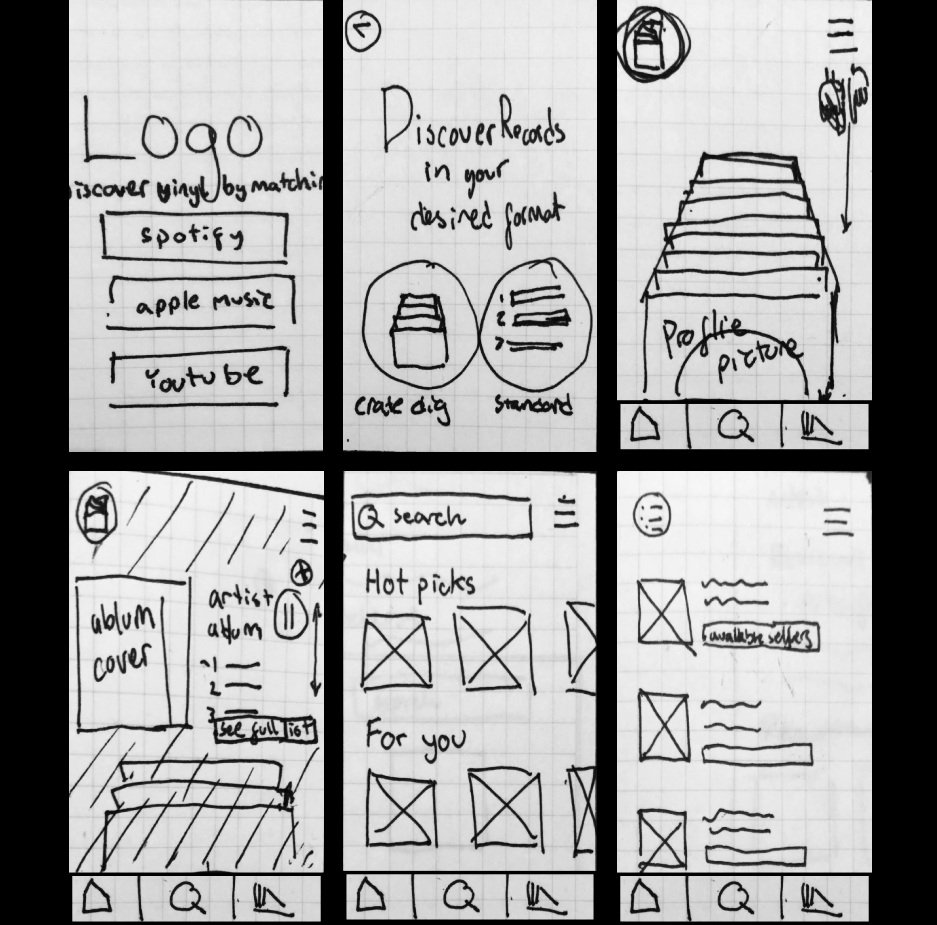
Stage 2
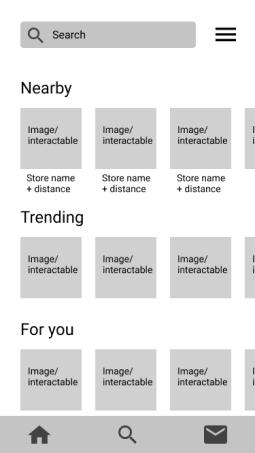
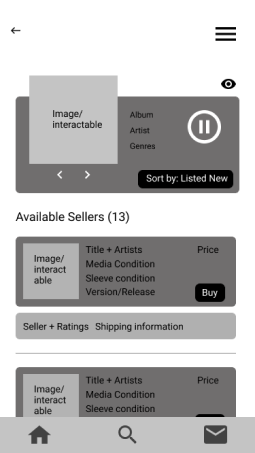
Low & Mid Fidelity Wireframes
Users need to be able to find their desired records more quickly and efficiently.
This is an issue that affects both types of personas. Hence, the application’s main focus is to create an efficient browsing experience that caters towards the two persona’s common needs.
Users need to be able to find their desired records more quickly and efficiently.
This is an issue that affects both types of personas. Hence, the application’s main focus is to create an efficient browsing experience that caters towards the two persona’s common needs.
Solution 1: Spotify Intergration
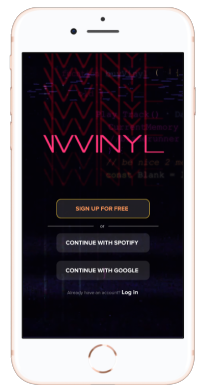
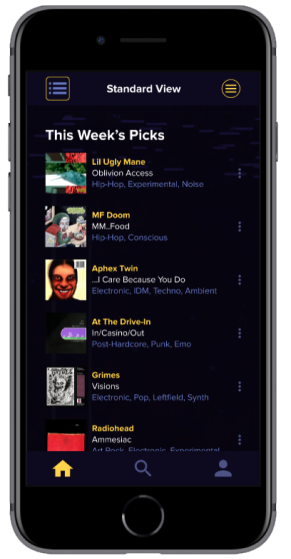
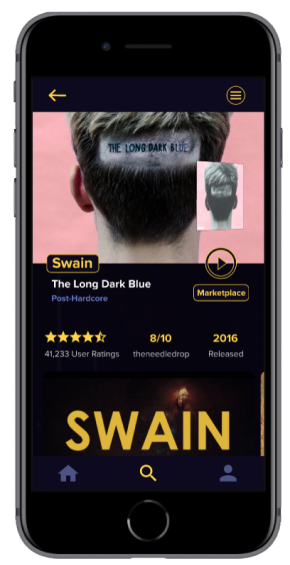
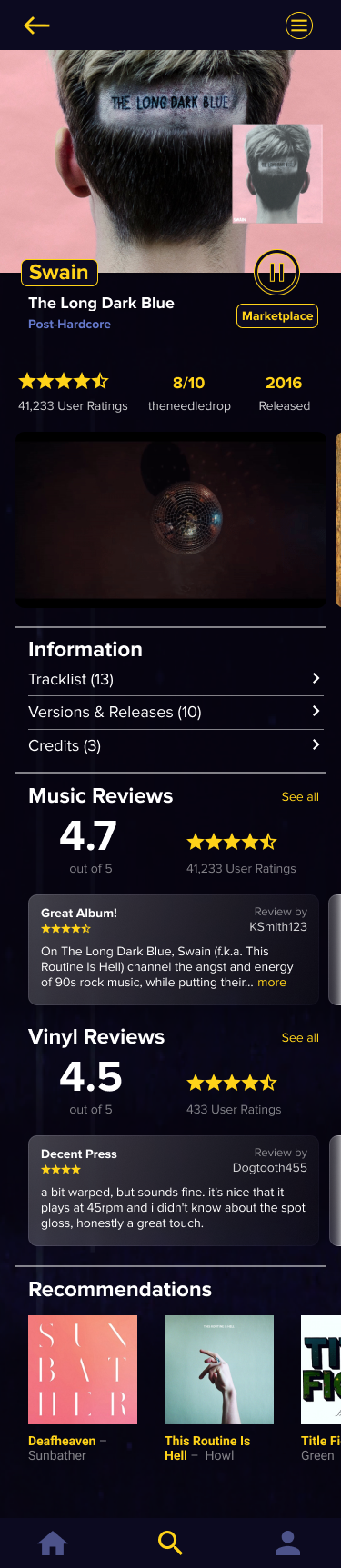
Feature: Give users sections to explore artists and album recommendations when they are browsing. This can be done when users are exploring at the album or artists page.
Supporting research: Participants who prefer to buy records in person (3 out of 6) from the interviews all claim that their browsing experience is hindered by the recordstore format. This is largely due to the fact that record stores do not have a section for similar artists or albums specific to what the individual user is currently browsing.
Solution 2: Similiar artists
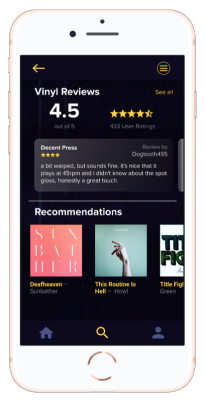
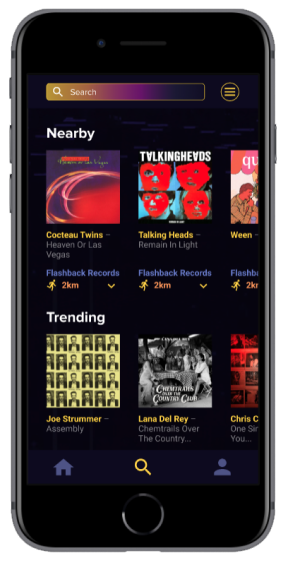
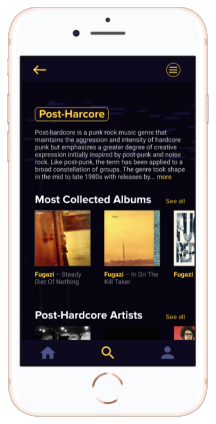
Feature: Give the artists and albums genres tags so users have an easier time finding music in the genres they like. Users will also be taken to the genre page where they can explore what is currently trending, popular artists, etc.
Supporting research: This was one of the problems that both types of record buyers had when browsing in their preferred platform. According to the user interviews, 4 out of 6 participants stated that the genres tags in both online and offline platforms were not accurate. For example, electronic genre is a very broad term so this makes it difficult for users to find their desired records.
Solution 3: Genre tags
Design rationale: the issue
Stage 3
Prototype