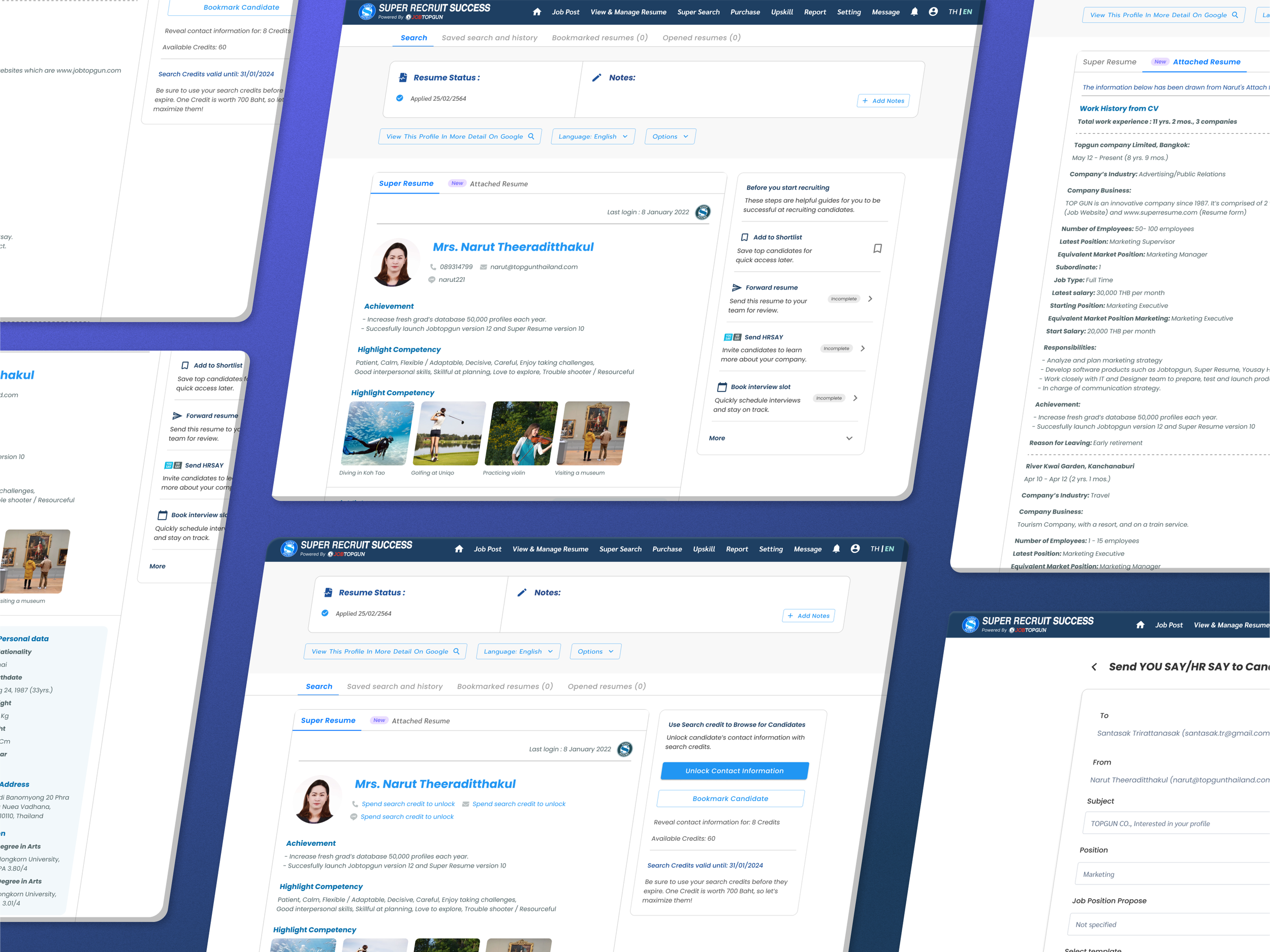
Super Recruit
Super Recruit Success is a platform designed to streamline HR recruitment processes. One of the platform's key features is helping HR professionals find and process candidates efficiently. The most valuable aspect of the recent redesign was optimizing how users review and process resumes, which is crucial for moving the right candidates forward in the recruitment process.
Product Overview
Team members
2 Product Managers
3 Developers
1 Product Designer
The Challenge
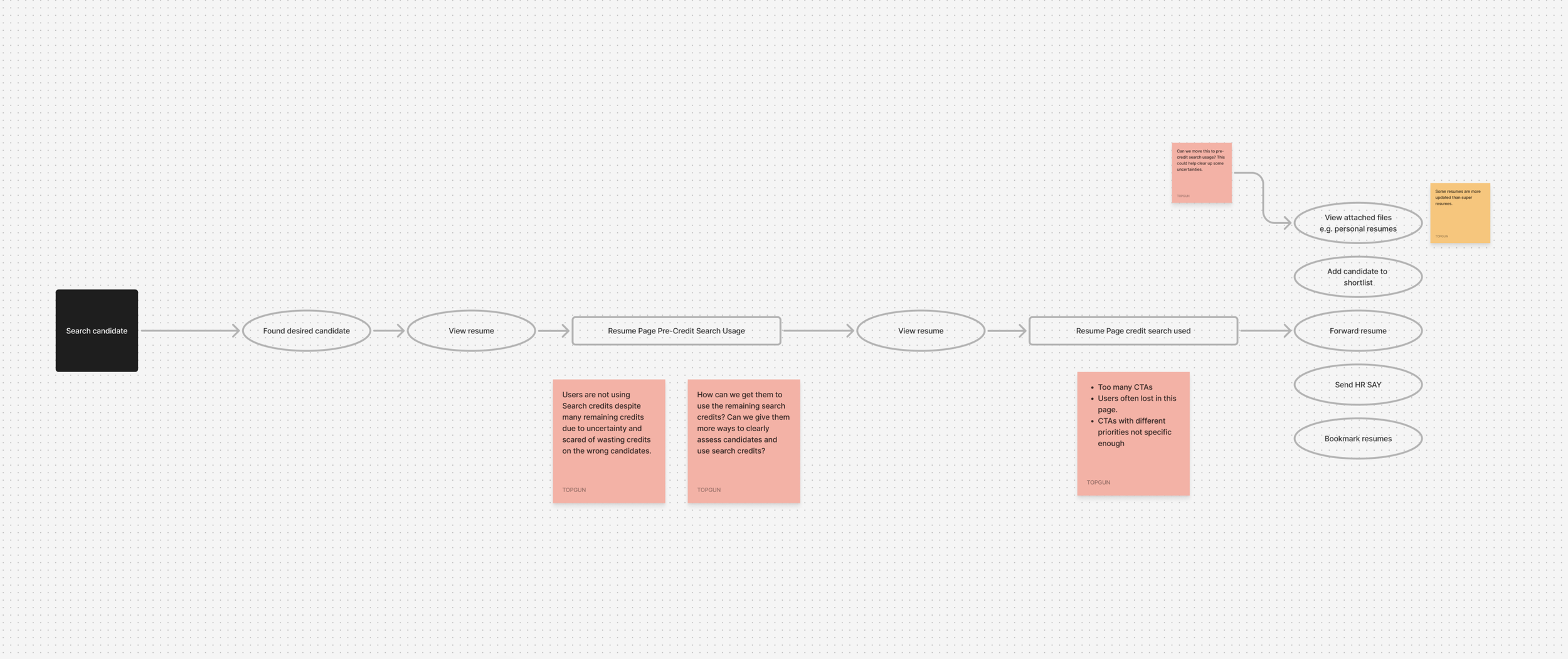
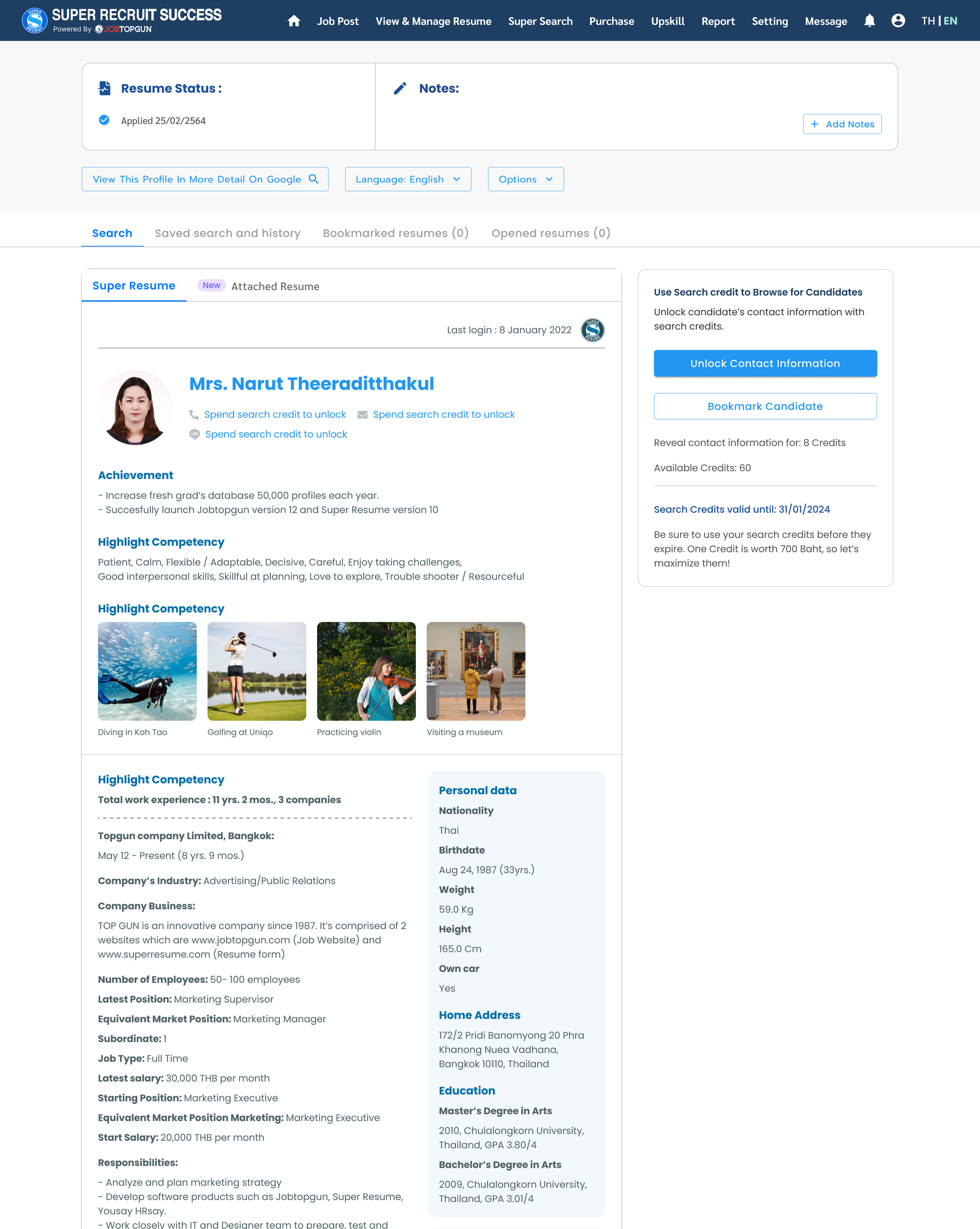
HR professionals hesitate to use their search credits due to uncertainty about candidate suitability. Once credits are spent, they encounter a confusing processing page with multiple actions like forwarding resumes, shortlisting, booking interviews, and sending HR SAY, but no clear guidance on which tasks to prioritize. This lack of structure leads to a fragmented and inefficient user experience.
Problem Statement
Key Metrics for Success
Credit Usage: Measure the increase in search credit usage after implementing the attachment preview feature.
Task Completion Rate: Track how quickly users complete key tasks (e.g., forwarding resumes, booking interviews) on the redesigned processing page.
Engagement with Attachments: Monitor how often HR professionals view attached resumes and portfolios before deciding to use credits.
The Solution
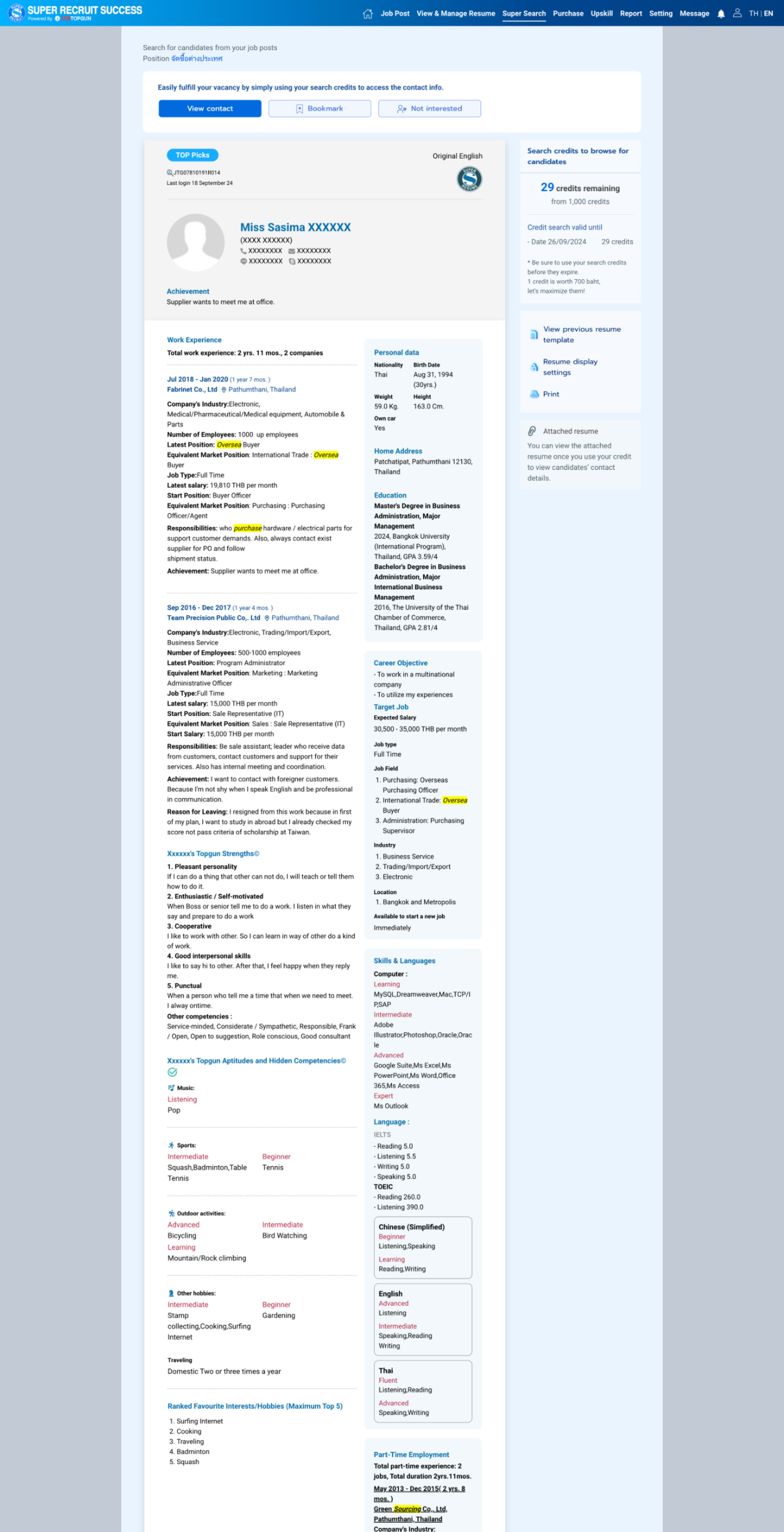
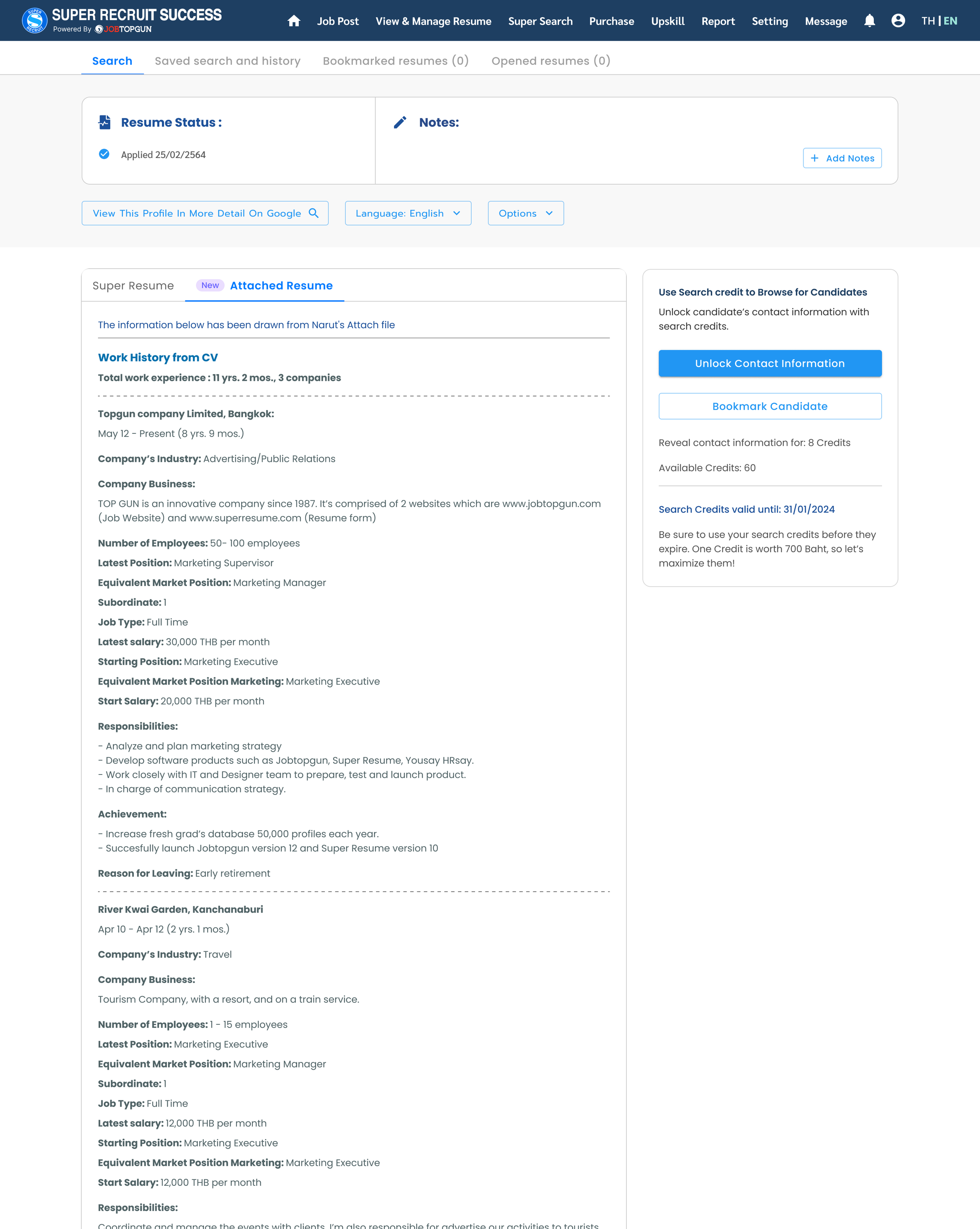
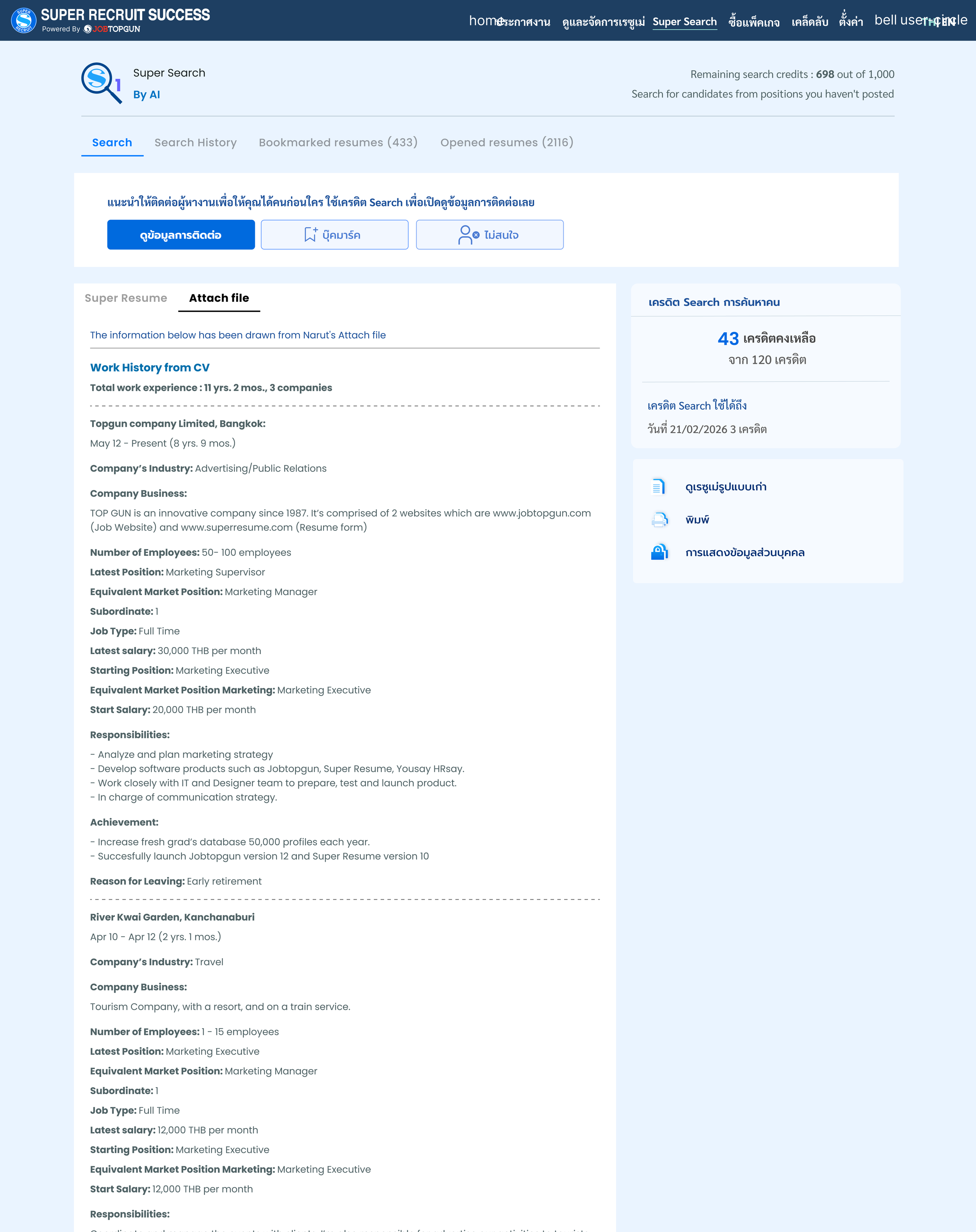
Attachment Preview: HR professionals can now preview attached resumes, portfolios, and other documents before using their search credits. This provides the full context needed to assess a candidate's qualifications.
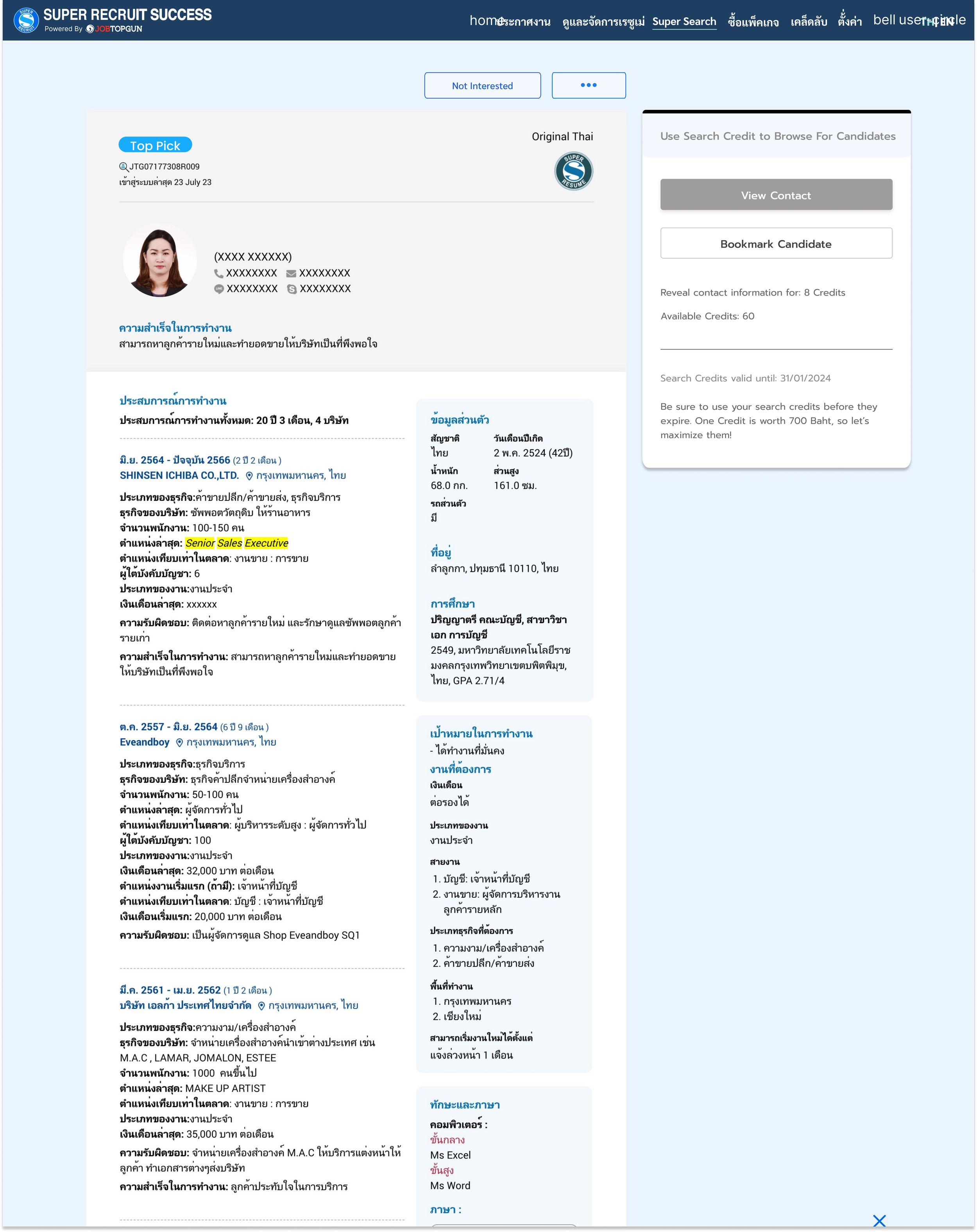
Reduced Focus on Credits: The focus on remaining search credits was minimized, placing more emphasis on helping users complete their recruitment tasks rather than on the credits themselves.
Pre-Search Credit Usage Enhancement
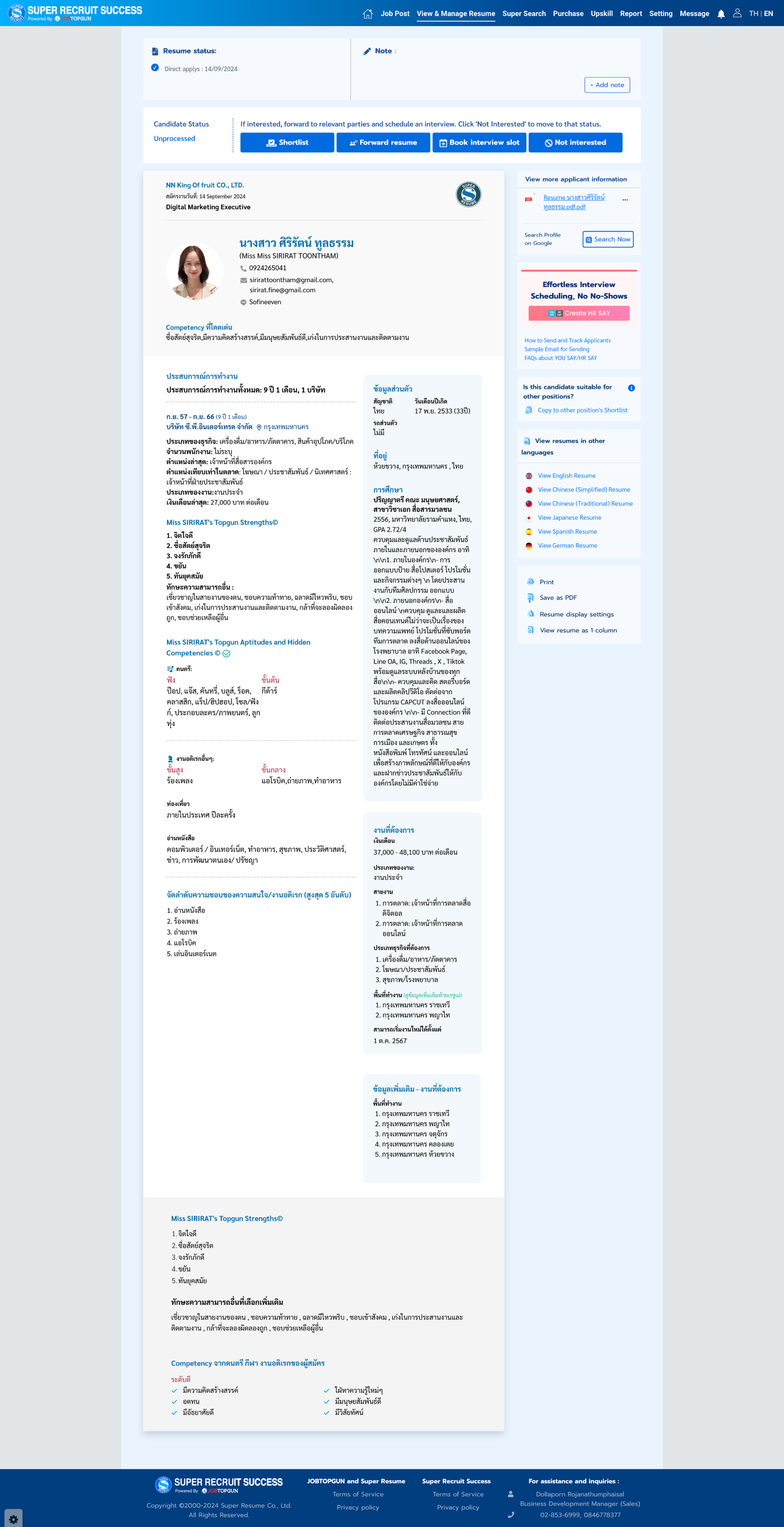
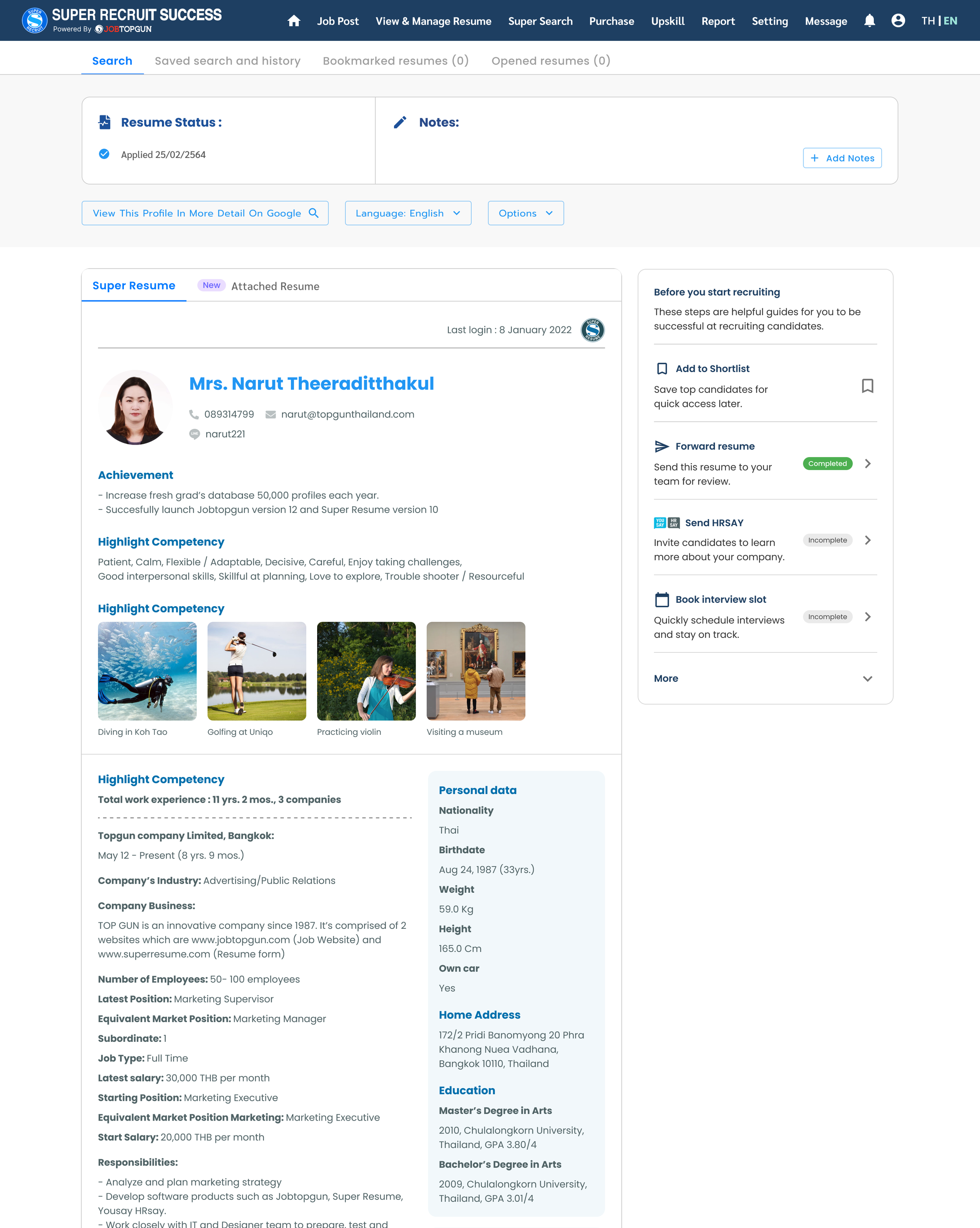
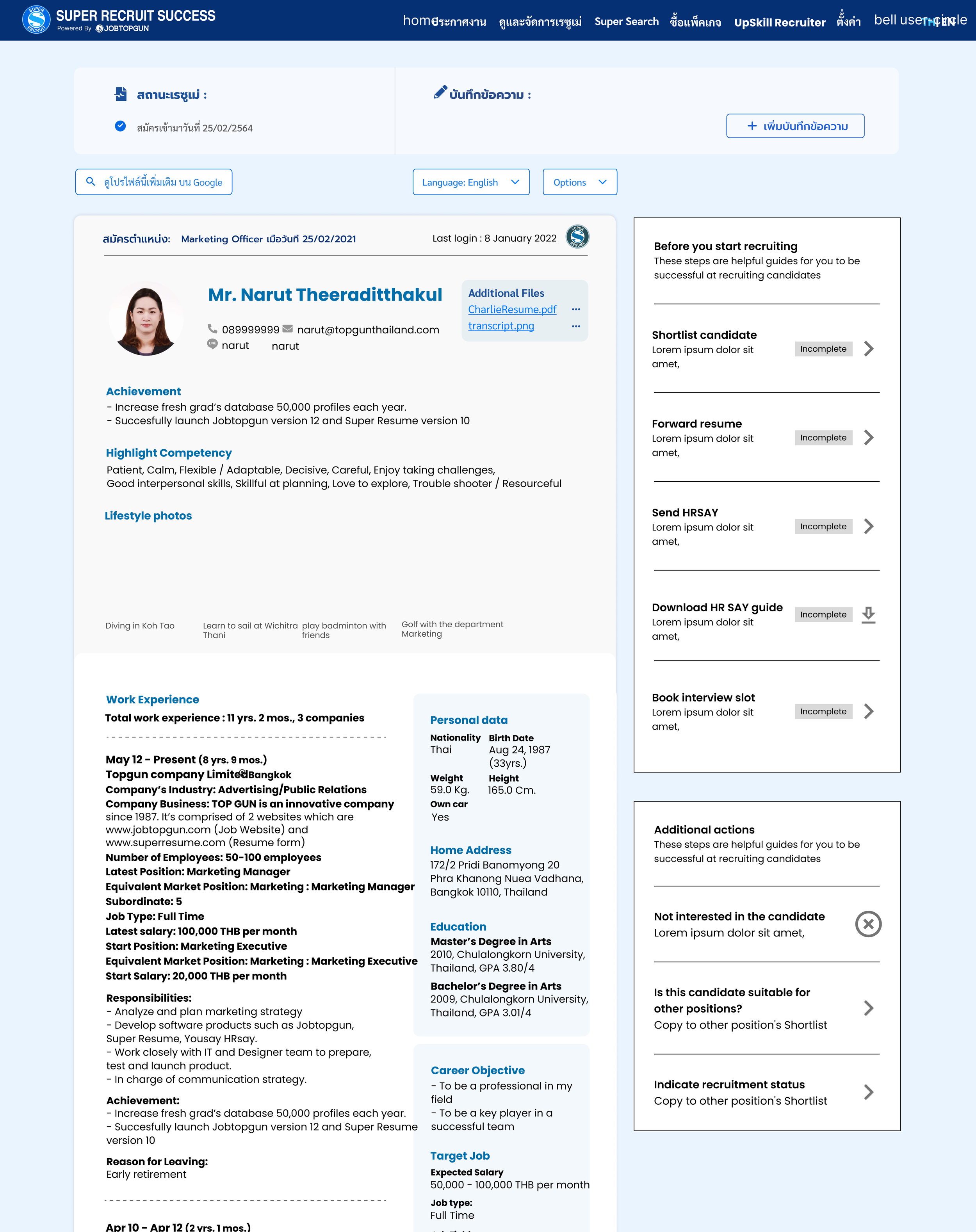
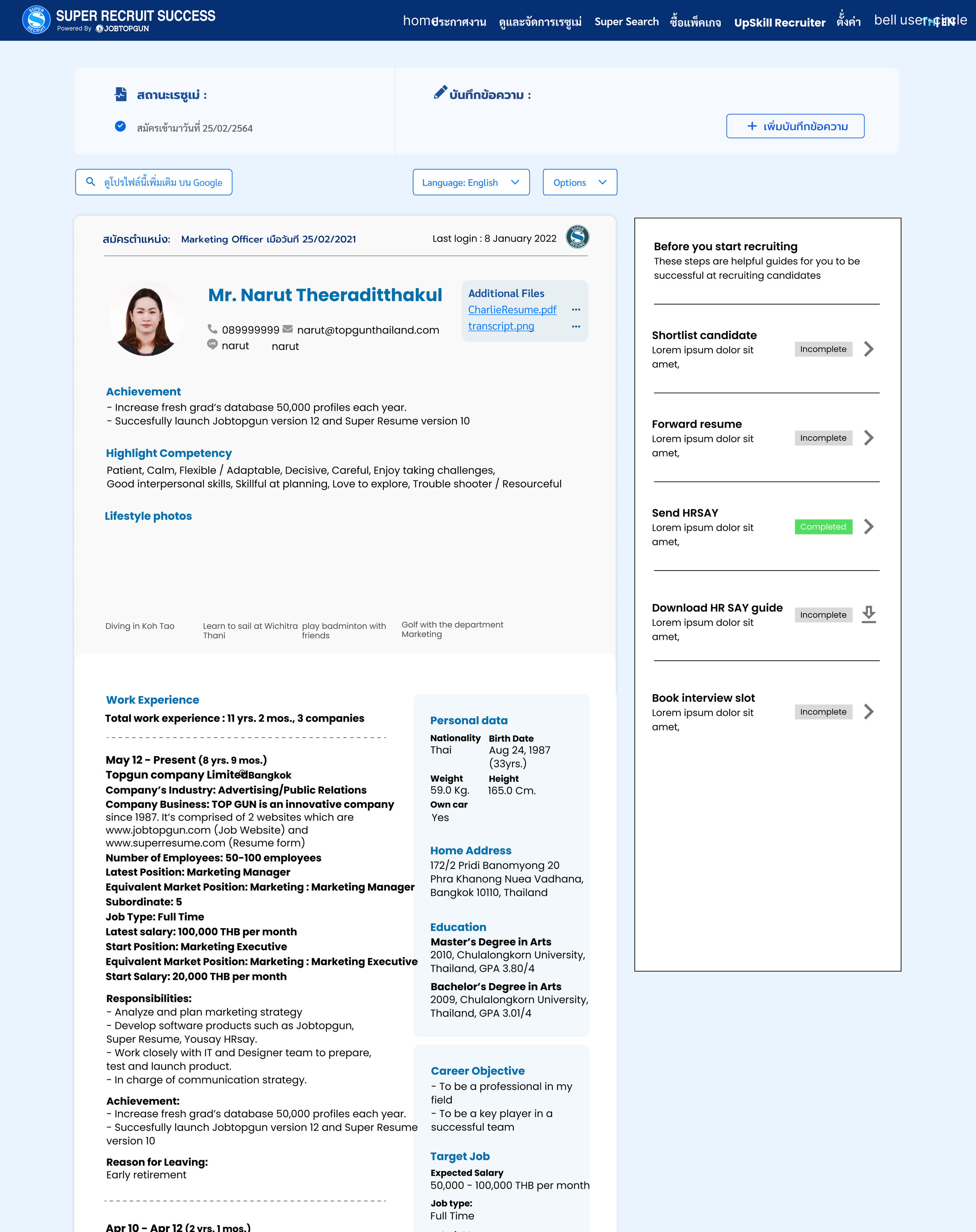
Prioritized Call to Action: The processing page was reorganized to prioritize key actions. High-priority tasks are now grouped together to create a clear user flow.
Task Status Indicators: Each action now has a clear status indicator, helping HR professionals understand what steps have already been taken and which are still pending.
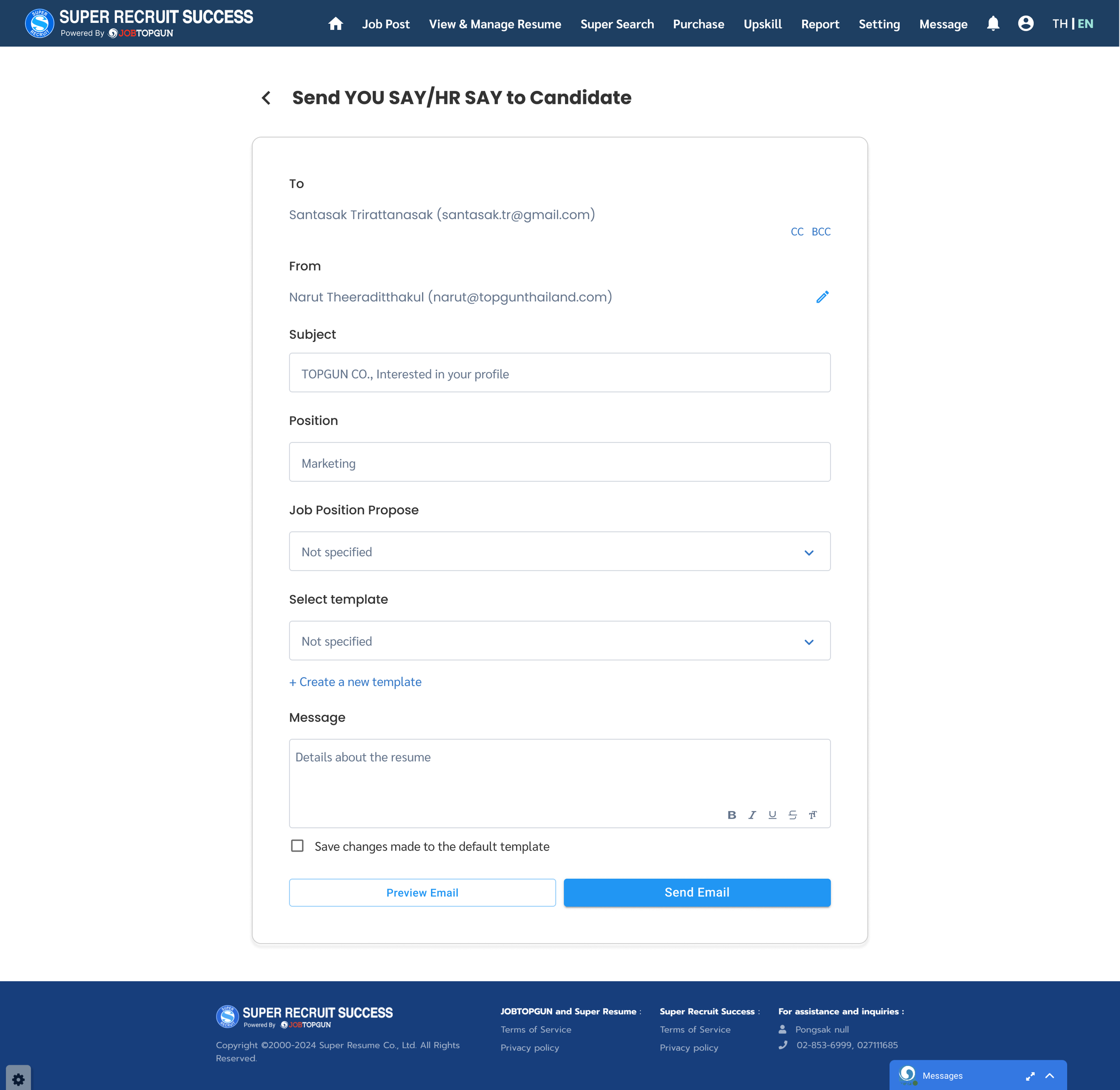
Processing Page Redesign:
UX Research
To understand why HR professionals hesitated to use search credits and identify issues on the processing page, I conducted both quantitative and qualitative research.
Amplitude Data Analysis: Tracked user behavior and identified underused features like search credits, providing objective, large-scale insights.
User Interviews: Gathered qualitative feedback on HR's hesitation and confusion with the processing page, offering deeper insights into their frustrations.
Usability Testing: Focused on task prioritization, revealing where users faced friction when performing actions like forwarding resumes or booking interviews.
Rationale for Research Techniques:
Fear of Wasting Credits: HR professionals needed to be sure of a candidate's fit before spending valuable credits.
Attachment Access: Lack of visibility into attached files (such as updated resumes or portfolios) was a significant concern.
Overwhelming Processing Page: HR professionals wanted a streamlined process for actions like forwarding resumes and booking interviews, with clearer guidance on which tasks to prioritize.
Key insights:
The Design
Streamlining Resume Processing with Pre-Credit Enhancements
I explored the challenges HR professionals faced with spending search credits, leading to wireframes that introduced an attachment preview feature for reviewing resumes and portfolios.
The redesign reorganized the processing page to prioritize actions like forwarding resumes, shortlisting, and booking interviews. User flow testing confirmed that these updates met user expectations, reducing decision-making uncertainty.
The final UI provided a clearer call to action and structured workflow, enabling HR to review candidates and process resumes efficiently. The attachment preview feature significantly encouraged HR to use their credits more confidently.
Outcomes Achieved

Search credit usage increased by 20%, with HR professionals feeling more confident in using their credits after reviewing full candidate details.
Increased Credit Search

The new processing page design reduced the time spent completing key tasks by 35%, making it easier for users to forward resumes, shortlist candidates, and book interviews.
Improved Task Efficiency

Better Engagement with Candidate Attachments
HR professionals now view candidate attachments (resumes and portfolios) 50% more often before deciding to use credits, leading to more informed decisions.